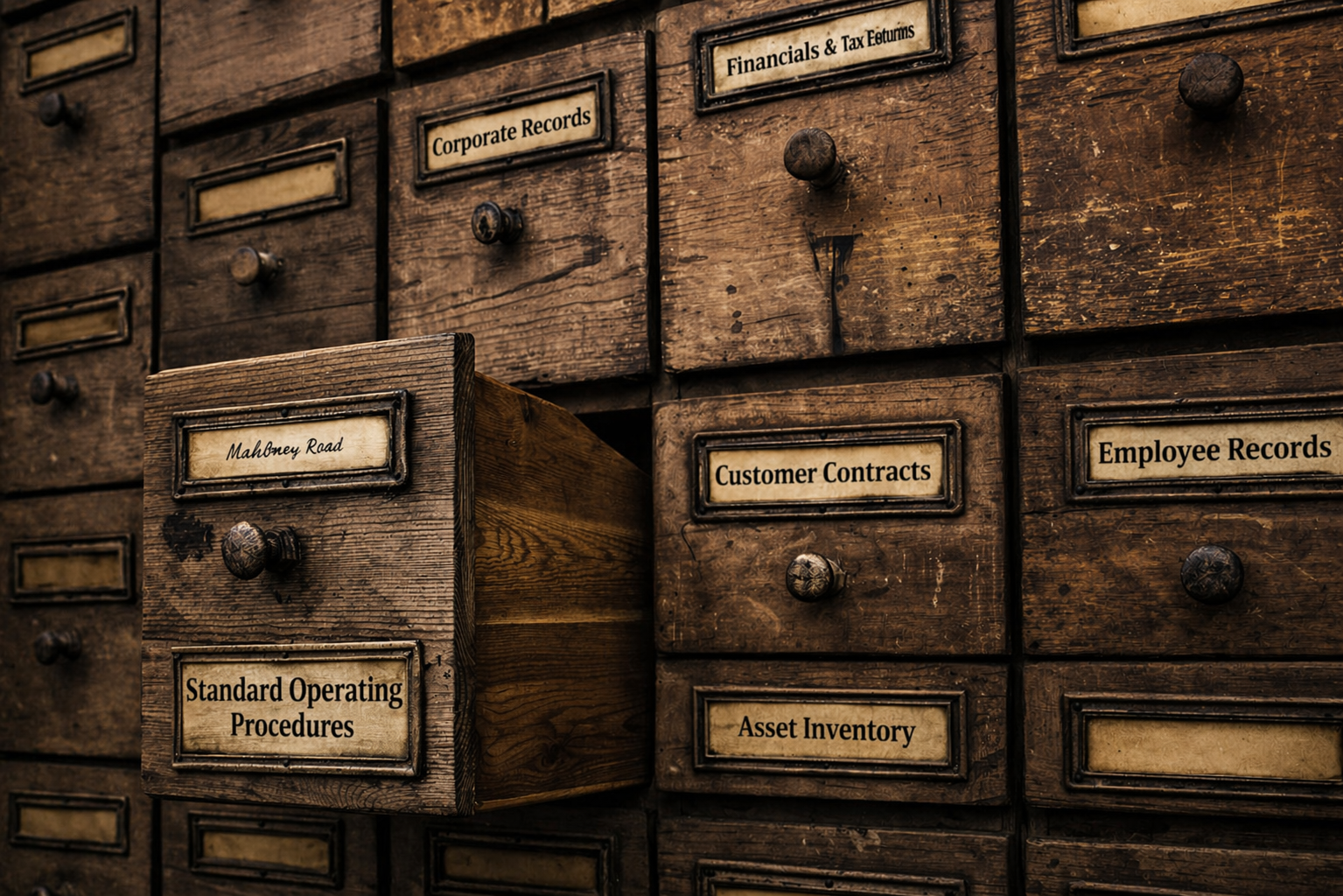
The Buyer-Ready Document Vault: What Serious Buyers Expect to See
A complete document vault is a sign of a professional operation. Here's a checklist of the documents buyers expect to see during due diligence — and why having them ready changes everything.
Definition
Document Vault (in exit planning)
A document vault is a systematically organized collection of legal, financial, operational, and HR documents prepared in advance of a business sale. Having a complete vault before going to market signals professionalism, accelerates due diligence, reduces buyer-perceived risk, and prevents deals from stalling when documentation requests arrive.
During due diligence, a buyer is going to ask for a lot of documents. A lot of them.
If you can produce them quickly and in an organized fashion, you signal that you're a professional who runs a tight ship. You build confidence. You keep the deal momentum going.
If you have to spend days or weeks digging through filing cabinets, old emails, and your attorney's archives, you signal that you're disorganized. You create doubt. You give the buyer time to get cold feet.
Scrambling for documents during due diligence is a classic amateur move, and it can kill a deal faster than almost anything else. A serious business has a document vault. It's not a "nice-to-have." It's an expectation.
Why a Document Vault Matters
A document vault isn't just a folder with a bunch of files in it. It's a systematically organized collection of all the legal, financial, and operational documents that a buyer needs to review to understand your business.
Having this prepared before you go to market does three critical things:
It accelerates due diligence. When a buyer requests a document, you can provide it in minutes, not days. This keeps the deal moving forward.
It builds buyer confidence. A well-organized document vault is a powerful signal that your business is professional, transparent, and well-managed.
It reduces your stress. You're not scrambling to find things under pressure. You're calm, organized, and in control of the process.
The Buyer-Ready Document Checklist
While every business is different, a comprehensive document vault is typically organized into several key categories. Here's what a serious buyer will expect to see.
1. Corporate and Legal Documents
This is the foundation. These documents prove that your business is a legitimate, properly structured entity.
Articles of Incorporation / Certificate of Formation
Bylaws / Operating Agreement
Shareholder Agreements
List of all shareholders and their ownership percentages
Minutes of board and shareholder meetings
Business licenses and permits
Any legal correspondence or records of past litigation
2. Financial Documents
This is where buyers spend most of their time. The goal is to provide a clear, consistent picture of your financial performance.
3–5 years of P&L statements and balance sheets
3–5 years of federal and state tax returns
Detailed breakdown of revenue by customer and service/product line
Accounts receivable and accounts payable aging reports
A documented add-back schedule
Any existing business valuations or appraisals
3. Customer and Sales Documents
These documents show the health and transferability of your revenue streams.
List of top 10–20 customers with revenue for the past 3 years
Copies of all customer contracts
Sales pipeline and backlog reports
Marketing materials and pricing lists
A well-organized document vault is a powerful signal that your business is professional, transparent, and well-managed. Scrambling for documents signals the opposite.
4. Employee and HR Documents
Buyers need to understand your team, your compensation structure, and any potential HR liabilities.
List of all employees with their roles, salaries, and start dates
Employee handbook and HR policies
Employment agreements and non-compete agreements
Details of any employee benefit plans
Records of any past HR issues or disputes
5. Operational Documents
This is how you prove that the business can run without you. These documents demonstrate that you have a transferable system.
Standard Operating Procedures (SOPs) for key processes
Organizational chart
List of key suppliers and copies of supplier contracts
IT systems overview (software, hardware, etc.)
6. Asset and Facility Documents
These documents provide a clear picture of the physical assets the buyer is acquiring.
List of all physical assets (equipment, vehicles, etc.) with their age and condition
Copies of all facility leases
Maintenance records for key equipment
Inventory reports and valuation methods
Must-Have vs. Nice-to-Have
Looking at this list, it's easy to feel overwhelmed. But not all of these documents are created equal.
Must-Haves: Corporate records, financial statements, tax returns, customer contracts, and employee lists are non-negotiable.
Nice-to-Haves: Detailed SOPs for every single process and extensive meeting minutes are great to have, but their absence won't necessarily kill a deal for a smaller business.
The goal isn't to be perfect. The goal is to be prepared. A buyer would rather see a well-organized vault with 80% of the documents than a disorganized mess with 100%.
Start now. Create a secure digital folder and begin organizing your documents into these categories. Work with your attorney, your CPA, and your team to fill in the gaps. The work you do now will pay for itself tenfold when you're in the middle of a high-stakes negotiation.
Frequently Asked Questions
What documents do buyers request during due diligence?
At a minimum, buyers and lenders will request three years of financial statements and tax returns, all active contracts and leases, business licenses and permits, insurance certificates, employee agreements, and any intellectual property documentation. The more organized and complete your document vault is at the start of due diligence, the faster and smoother the process — and the more confidence it builds in the buyer.
What happens if I can't produce documents during due diligence?
Missing or disorganized documents are one of the most common reasons deals slow down, get repriced, or fall apart entirely. Buyers interpret missing documentation as a sign of operational risk. Lenders may decline to finance a deal if they cannot verify the business's legal standing, lease terms, or financial history. Building a complete, organized document vault before you go to market is one of the highest-return investments you can make in your exit preparation.
Why This Matters for Your Exit
Why Document Preparation Determines Deal Speed and Outcome
Businesses that go to market without an organized document vault typically experience:
Due diligence delays — scrambling to locate documents slows every stage of the process
Buyer confidence erosion — disorganized documentation signals a disorganized operation
Deal-killing gaps — missing contracts, expired licenses, or incomplete records can end a transaction
Lender complications — SBA and conventional lenders have specific documentation requirements that must be met
A complete, organized document vault is one of the most concrete signals a seller can send that their business is professionally managed and ready to transfer.
Related Exit Readiness Factors
Your document vault is the evidence base for every other dimension of exit readiness:
The hidden cost of owner dependency — SOPs and process documentation in your vault are the primary proof that your business runs without you
Want to Know Exactly What to Put in Your Vault?
The Mahoney Road Foundations Track includes an Essential Document Vault checklist with 63 specific items across 5 categories. Start with the free Exit Readiness Assessment to see how your current documentation stacks up against what buyers expect.